The “Break in Chain” Argument in Court : How a Single Clerical Error Can Win a Section 39B Drug Trafficking Case in Malaysia
A Section 39B charge under the Dangerous Drugs Act 1952 is a battle of millimeters. In the Malaysian legal system, the distance between a conviction and an acquittal often rests on a single unrecorded signature, a mislabeled date, or an inconsistent description of a plastic bag.
If your family member has been arrested for drug trafficking, understand this: the prosecution must prove their case beyond a reasonable doubt. My role as a drug trafficking lawyer in Kuala Lumpur and Selangor is to scrutinize the “Chain of Evidence.” If that chain breaks, the prosecution’s case collapses.
What is the “Chain of Evidence” in a Drug Case?
In any prosecution under the Dangerous Drugs Act 1952, the state must prove two critical elements: Custody/Control and Knowledge. However, before the court even considers these, the prosecution must prove that the substance seized is actually a scheduled drug.
This process involves two stages:
-
“Sebelum Kimia”: The original gross weight at the time of seizure.
-
“Lepas Kimia”: The pure weight of the drug after laboratory analysis.
If you are caught with 10kg of a white powder that turns out to be salt after the chemist’s analysis, there is no case. Therefore, the Jabatan Kimia (Chemistry Department) plays the most vital role. The “Chain of Evidence” is the documented movement of the drugs from the moment of seizure until they reach the chemist. If that movement is not perfectly recorded, the identity of the drugs becomes doubtful.
The 6 Critical Stages of the Evidence Chain
Drawing from over a decade of exclusive practice in criminal law, I have identified the specific points where the police often fail. Each stage requires a specific legal form:
1. The Seizure & The Raiding Officer (RO)
The RO is the complainant. From the moment the drugs are found—whether in a car, a house, or a bag—they must remain under the RO’s exclusive control.
-
The Police Report: Must state the exact number of packets, the color of the container (e.g., “Red LV Bag”), and the precise location of the find.
-
Marking the Exhibit: The RO must mark the packets (e.g., A1, A2, B1) and sign them immediately.
2. Borang Bongkar (Search List)
This document lists every item seized. It must tally perfectly with the Police Report. If the report says “Blue Bag” but the Borang Bongkar says “Red Bag,” the chain is compromised.
3. Borang Serah Menyerah (Handover Form)
This is the formal record of the drugs moving from the RO to the Investigating Officer (IO). It records the exact date and time of the transfer.
4. The Investigating Officer’s (IO) Custody
Once the IO receives the drugs, they must be kept in a locked, secure locker where only the IO has access.
-
Borang Pendaftaran Barang Kes: Every time the drugs are moved—for photography, fingerprint dusting, or DNA testing—it must be recorded in this book. Failure to record a single movement is a “break.”
5. Movement to Jabatan Kimia
The IO eventually sends the drugs for analysis. The date they leave the police station must match the date the chemist receives them.
6. Resit Kimia (Chemist Department Receipt)
The final document. If the IO records sending 10 packets but the Chemist records receiving 11 (or 9), the prosecution’s case is legally dead.
How the “Break” Occurs: Common Fatal Flaws
In my experience defending high-profile cases in Shah Alam and Kuala Lumpur, I look for these specific discrepancies:
-
Date Mismatches: If the arrest was Jan 1, 2026, but the RO marked the exhibit as Jan 1, 2025, that is a fatal clerical error.
-
Description Conflicts: A “Purple Tablet” in the report vs. a “Blue Tablet” in the chemist report.
-
Missing Items: If drugs were found in a pair of trousers but the trousers are not produced in court, the “identity” of the find is in question.
Legal Precedent (Federal Court of Malaysia):
YUSRI PIALMI V PP [2010] 6 CLJ 878: The court ruled that if the prosecution fails to explain the movement of drugs during a specific period, there is a serious doubt as to the identity of the exhibit.
SIA PANG LIONG V PUBLIC PROSECUTOR [2013] 2 MLJ 490: The Federal Court acquitted the appellant because the officer in custody of the drugs for a month was not called to explain how they were kept.
HUSSIN MOHAMAD v. PP [2016] 10 CLJ 59: The absence of the container (in this case, socks) where the drugs were found created a doubt that led to an acquittal.
Why You Need a Specialist in 2026
Modern policing uses advanced technology to implicate the accused:
-
Phone Forensics & WhatsApp: Tracking deal negotiations.
-
DNA & Fingerprint Dusting: Proving access to the drugs.
-
CCTV & Call Recordings: Showing “active” involvement.
When the digital evidence is strong, the Technical Defense (the Chain of Evidence) becomes your strongest shield. I have successfully secured acquittals for clients by identifying “human errors” in the midst of “high-tech” investigations.
Proven Success in Section 39B Cases
I have won numerous cases based on the “Break in Chain” principle:
-
PP v Kasthuri Narayanasamy: A moral studies teacher was acquitted in the Shah Alam High Court after I discovered a single exhibit out of hundreds was marked with the wrong year.
-
PP v Tan Kah Soon & Anor: A couple escaped the death penalty at the Kuala Lumpur High Court because an exhibit was marked with an incorrect date. This case was extensively reported in the New Straits Times, Berita Harian, and more.
View all other Section 39B Drug Trafficking Acquittal Cases by Criminal Lawyer Sivahnanthan Ragava.
Act Now: Your Defense Starts at the Police Station
If you or a loved one is facing a drug charge, do not wait until the trial. You need a lawyer who understands the depth of the Dangerous Drugs Act 1952 and the strict procedural requirements of the Malaysian courts.
Sivahnanthan Ragava is available 24/7 to provide criminal advisory work & defense for drug cases in Kuala Lumpur, Selangor, and throughout Malaysia. We provide a full range of Legal Services tailored to high-stakes criminal defense.
Contact Us Today:
A Section 39B charge is a battle of millimeters. One wrong signature is the difference between freedom and a life sentence. Don’t leave your future to chance.
Frequently Asked Questions: Section 39B & The Chain of Evidence
1. What exactly is a “Break in the Chain of Evidence” in a Malaysian drug case?
A “break” occurs when the prosecution cannot account for the movement, identity, or safety of the seized drugs from the moment of arrest until they reach the Chemistry Department. As Criminal Lawyer Sivahnanthan Ragava has proven in numerous High Court cases, even a single hour of “unaccounted time” or a missing signature on a Borang Serah Menyerah can be exploited to secure an acquittal.
2. Can a simple clerical error on a police report win my Section 39B case?
Yes. In the eyes of the Federal Court, the law is strict. If the Raiding Officer marks an exhibit with the wrong date or year—as seen in the successful defense of a moral studies teacher by Sivahnanthan Ragava—it creates “reasonable doubt.” If the court cannot be 100% sure the drugs in the lab are the same ones seized from the accused, the case must be dismissed.
3. Why does the color of the bag or container matter?
Consistency is the pillar of the prosecution’s case. If the Police Report states drugs were found in a “Red LV Bag” but the Borang Bongkar or Borang Pendaftaran Barang Kes describes it as a “Brown Bag,” it suggests the evidence may have been tampered with or switched. We exploit these discrepancies to destroy the prosecution’s credibility.
4. Is Section 39B bailalble in Malaysia?
Section 39B is classified as a un-bailable offense. For a detailed breakdown, see our guide: Can I Get Bail for Section 39B?
5. What should I do if my family member is arrested for drug trafficking in KL or Selangor?
The first 24 hours are critical. Do not wait for the trial to start. A specialist drug trafficking lawyer needs to monitor the police remands and the early documentation (like the Borang Bongkar) immediately. Sivahnanthan Ragava is available 24/7 for emergency legal intervention in Kuala Lumpur and Selangor. Contact us immediately here.
About the Author
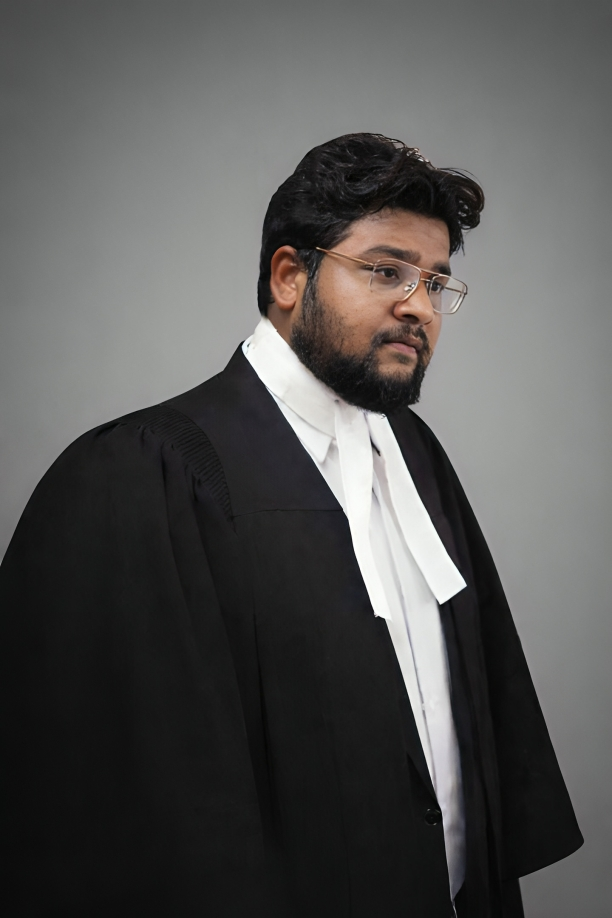
Sivahnanthan Ragava is a criminal defence lawyer based in Kuala Lumpur who specialises in serious criminal cases, including drug trafficking offences under Section 39B of the Dangerous Drugs Act.He regularly represents accused persons in drug trafficking cases before the High Court in Kuala Lumpur and Selangor.
If you or a family member has been arrested or charged with a drug trafficking offence, it is important to seek legal advice immediately. Sivahnanthan Ragava is available to be contacted at any time, including outside normal office hours. Unlike many law firms that close at 5pm, urgent criminal cases can arise at any time of the day or night.If you require an experienced drug trafficking lawyer or Section 39B lawyer in Kuala Lumpur or Selangor, you may contact Sivahnanthan Ragava directly for legal assistance.